
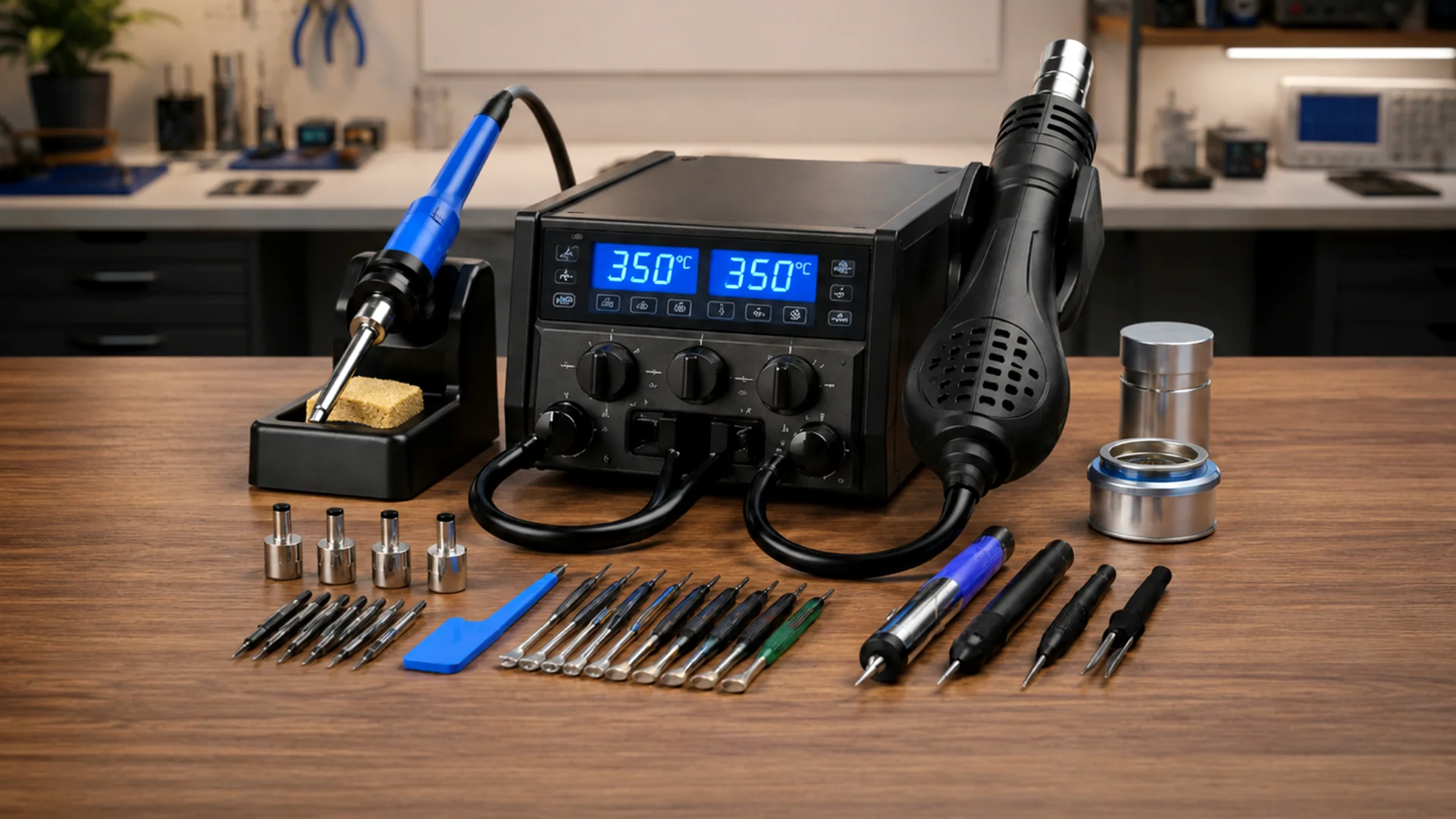
Introduction to Advanced Soldering Features
In 2026, the advancement in electronics means a soldering station is no longer a firearm, but an electronic precision instrument for delicate work, multi-layer PCBs and complex circuits. To better your results when soldering, it's important to know what features they have.
Today's digital soldering stations have cleverly designed features to ensure optimal and consistent results, even when working with delicate techniques. They allow soldering not only to be done faster, but also safer and more accurate.
Did you know? Soldering stations can provide exact temperatures even during prolonged use of the soldering iron, making changes to the heat every millisecond, ensuring the correct flow of solder.
Core Features That Define Top Soldering Stations
There are various important factors that contribute to the efficiency of soldering stations, which include temperature control, speed of heating up time, quality of build, and safety controls. This, in turn, ensures constant efficiency is maintained, delicate components aren't damaged, and accuracy is achieved. Higher quality stations offer greater speed, stability, and soldering quality for commercial use, as well as domestic use.
1. Temperature Stability and Control
When you are soldering, stability is crucial. In a temperature-controlled station, regardless of how hard you are working or where in the region you are working, a stable temperature is present throughout.
2. Rapid Heat Recovery
Premium stations have a fast recovery time after a soldering operation, allowing for increased throughput.
3. Ergonomic Design
Ergonomic handles and a lightweight body prevent fatigue.
4. Safety Mechanisms
New stations feature auto shut-off, ESD, and overload protection.
Feature Comparison Table
|
Feature |
Basic Station |
Advanced Station |
Professional Station |
|
Temperature Control |
Manual |
Digital |
Microprocessor Controlled |
|
Heat Recovery |
Slow |
Moderate |
Instant |
|
Safety Features |
Limited |
Standard |
Advanced |
|
Durability |
Low |
Medium |
High |
|
Best Use |
Beginners |
Hobbyists |
Experts |
Understanding Temperature Control in Depth
The control of the station is not just simply programming of a temperature - it's about maintaining a stable temperature under fluctuating conditions.
Using the electronics soldering station, the temperature does not vary as much, which is ideal for very small electronic components.
Did you know? Overheating can lift the pads of printed circuit boards (PCB) beyond repair.
Temperature vs Application Table
|
Application |
Ideal Temperature Range |
|
Basic Wiring |
180°C – 220°C |
|
PCB Work |
220°C – 260°C |
|
Lead-Free Solder |
240°C – 280°C |
|
SMD Components |
260°C – 300°C |
Advanced Technologies in 2026 Soldering Stations
Soldering stations of 2026: revolutionized with smart tech, automation, and digital precision.
Soldering stations offer more than just heat, but also real-time monitoring and dynamic temperature adjustment as well as programmable functions to maintain greater precision and accuracy, which is essential in fine electronics, where a slight fluctuation could be a manufacturing fault or under-performance.
Smart and connected systems has been used to enable features such as, IoT, data logging and remote maintenance in order to control soldering operations more closely and in order to increase quality control in the manufacturing stage, according to the industry
Did you know? Today's soldering stations can save temperature profiles for a range of applications.
Key Advanced Technologies Include
- PID temperature control for highly accurate and stable heat regulation
- Digital calibration systems for precise temperature adjustments
- Smart sensors that monitor and adjust heat in real time
- IoT connectivity for remote monitoring and diagnostics
- Auto-sleep and energy-saving modes to extend tool lifespan
- Multi-channel systems for handling multiple tools simultaneously
A hot air soldering station can be used to remove components without damaging others.
Role of Rework Stations in Modern Electronics
When repairing electronics, you need more than an iron. Using a soldering rework station, technicians can safely replace components.
Applications of Rework Stations
- Mobile phone repair
- Laptop motherboard repair
- Industrial PCB maintenance
The right SMD rework soldering station is needed to work with the tiny components in modern devices.
Importance of SMD Soldering
SMDs are very small and delicate.
An SMD soldering station is the tool for this job as it provides:-
- Fine tip control
- Stable temperature
- Precision heating
Did you know? SMDs are used in more than 90% of today's electronics, not through holes.
Choosing the Right Station for PCB Work
A correct soldering station should be purchased for use with printed circuit boards, as any sensitive electronics contained within them can easily be destroyed if temperatures are set incorrectly and too high. Soldering stations provide perfect control for the making of good connections without burning any delicate components. Stations offer consistent heat, essential for the integrity of PCBs during soldering and repair work, unlike basic tools.
The choice of wattage and temperature settings for printed circuit boards are essential as are its connections and tip selection. A reliable soldering station should be able to provide a range of settings that match what is being worked on to promote appropriate solder flow and prevent cold connections. Digital stations are used on applicators because their temperature tolerances are extremely tight, and this is perfect for repairing sensitive electronics
Key Factors to Consider
- Accurate temperature for sensitive parts
- Consistent heat to prevent damage to the PCB
- Appropriate tips for various applications
- Appropriate wattage for heat transfer
Industrial Applications of Soldering Stations
Reliability and efficiency matter in production. An industrial soldering station is built for long hours of work without degradation in performance.
Industrial Use Cases
- Mass production lines
- Automotive electronics
- Aerospace systems
Understanding Pricing and Value
The price soldering station depends on features, brand, and performance capabilities.
Pricing Breakdown Table
|
Category |
Price Range |
Features |
|
Entry-Level |
Upto ₹1,500 – ₹3,000 |
Basic functionality |
|
Mid-Range |
Upto ₹3,000 – ₹8,000 |
Digital control, better built |
|
High-End |
Upto ₹8,000 – ₹25,000+ |
Advanced features, durability |
Industrial soldering stations cost more as it is built more durably with sturdy construction and controls.
How to Maintain Your Soldering Station
Regular maintenance extends life and maintains performance.
Maintenance Tips
- Clean the tip regularly
- Use proper solder material
- Avoid overheating
- Store safely after use
Using the right soldering station tips can make a big difference.
Did you know? The life of a soldering tip can be extended by 5 times.
Common Mistakes to Avoid
Users often damage electronic components through mistakes.
Top Mistakes
- Using incorrect temperature
- Applying excessive heat
- Ignoring tip cleaning
- Using low-quality equipment
Having a good-quality soldering iron station helps prevent these issues by offering precision control.
Finding the Right Supplier
To ensure your new soldering station is functioning as intended, when selecting soldering station products locally, make certain that you choose from a reputable retailer or manufacturer for good quality, authentic products, and reliable warranties.
Expert Buying Checklist
What to look for when buying:
- Temperature range and control
- Build quality
- Compatibility with your work type
- Safety features
- Brand reputation
Quick Comparison Table for Buyers
|
Requirement |
Recommended Type |
|
Beginner |
Basic Digital Station |
|
Hobbyist |
Mid-Range Digital |
|
Professional |
Advanced Digital |
|
Repair Work |
Rework Station |
|
Industrial Use |
Industrial Station |
Conclusion
There are different types of soldering stations, each with its own specialty. You should determine your personal need and select a unit that is precise, reliable, stable, and that is perfectly suited to whether you are assembling SMD components or mass producing a manufacturing item.